
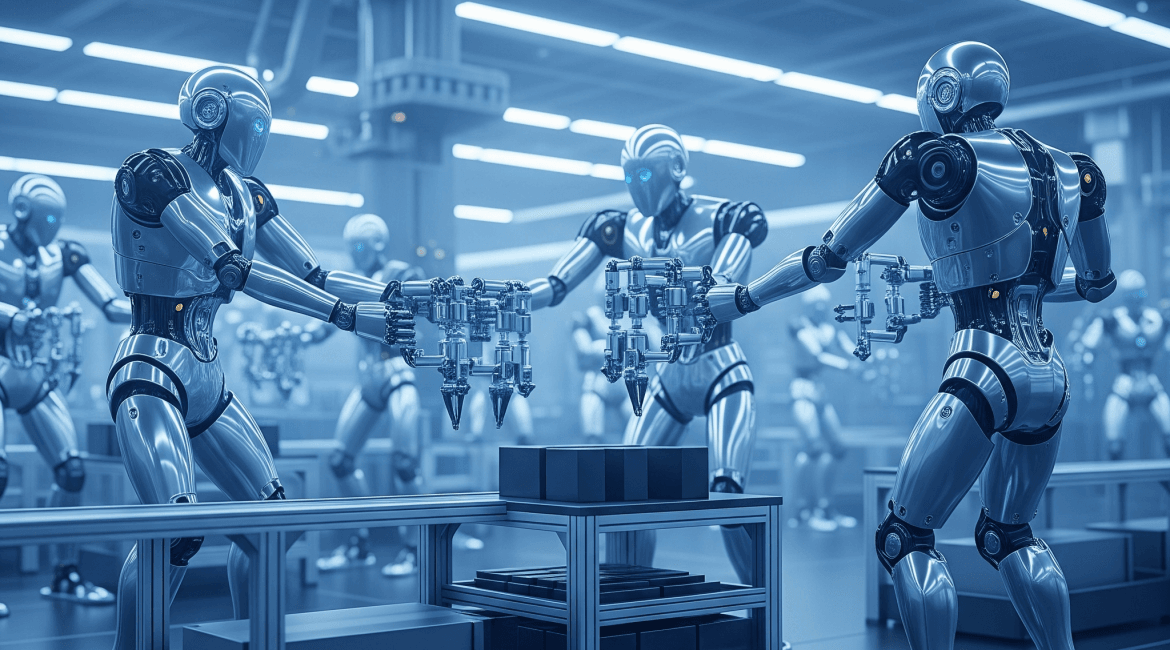
The Intelligent Revolution: How AI is Powering the Future of Automation
The future of automation is here, and it’s undeniably powered by artificial intelligence (AI). This rapidly expanding field of computer science focuses on creating smart machines that can think and act like humans. Indeed, AI has the power to fundamentally change how we interact with technology and automate everyday tasks across various industries. Therefore, in this article, we will explore the profound ways in which AI is reshaping the landscape of automation, unlocking unprecedented levels of efficiency, productivity, and innovation.
Understanding the Core of AI
At its essence, AI is a dynamic area of computer science that aims to build machines with human-like thinking and acting abilities. It works by programming machines to learn from vast amounts of data and make decisions based on what they observe. Consequently, this allows AI to automate tasks that traditionally need human intellect, like sophisticated data analysis and understanding complex patterns. AI also drives advanced robots that can perform jobs typically requiring human workers, often in challenging environments. To truly get the best results from these smart systems, knowing how to communicate with them clearly and effectively is key. Resources dedicated to mastering AI communication, such as understanding how to craft effective instructions (prompts), offer invaluable insights into unlocking AI’s full potential. For a deeper dive into the basics of AI, consider exploring the MIT Technology Review’s AI section.
How AI is Changing Automation
AI is fundamentally changing how we automate tasks. Now, machines can learn and make choices based on what they observe, making automation far more efficient than ever before. For instance, AI is revolutionizing customer service by enabling systems to understand the nuances of inquiries and provide personalized advice. Similarly, in manufacturing, AI can analyze large datasets to optimize processes, efficiently sort materials, and spot subtle patterns that improve quality control. To effectively guide these AI systems in diverse automation scenarios, learning how to give clear and targeted instructions is very important. The AI Prompt Fundamentals Guide offers practical techniques for crafting prompts that yield the desired results, enabling you to harness AI’s power in automation effectively.
The Multifaceted Benefits of AI in Automation
The integration of AI into automation unlocks a wealth of compelling benefits. AI-powered machines can work faster and more accurately than ever before, leading directly to significant increases in both efficiency and overall productivity. Moreover, AI extends automation to tasks that previously needed direct human involvement, like intelligently responding to complex customer inquiries and providing tailored recommendations. Indeed, AI is also proving invaluable in automating tasks that are simply too complex or dangerous for people, such as assisting with intricate medical diagnoses, identifying sophisticated patterns of financial fraud, and detecting emerging security threats in vast digital landscapes. Even in these advanced applications, the ability to formulate precise and effective prompts, a core skill taught in the AI Prompt Fundamentals Guide, significantly impacts the accuracy and usefulness of the AI’s output. Explore the transformative potential of AI across industries through reports from the McKinsey Global Institute.
Navigating the Challenges of AI in Automation
Even though AI can greatly transform automation, we still have some important challenges to address. One significant issue is ensuring that AI-powered machines are safe and secure. They need to be programmed to strictly follow safety rules and to accurately recognize and respond to potential dangers. Furthermore, they must be programmed to understand and respect ethical and legal guidelines.
Another critical challenge is making sure AI-powered machines are consistently reliable and accurate. They need to be trained on high-quality data to correctly identify complex patterns and react appropriately to different inputs. Plus, they need to be able to adapt intelligently to changing conditions and new situations without compromising safety or performance.
Finally, the integration of AI into automation necessitates a thoughtful consideration of cultural and social implications. AI-powered machines must be programmed with an awareness of diverse cultural norms and the ability to interact appropriately with various social groups, avoiding unintended biases or culturally insensitive outputs. Guiding AI towards culturally sensitive and ethical responses often requires careful prompt design, a key aspect of effective AI communication. Organizations like the Partnership on AI provide valuable insights into the social and ethical implications of AI.
AI is rapidly and profoundly reshaping the landscape of automation, ushering in an era of intelligent machines capable of driving unprecedented levels of efficiency, productivity, and innovation across diverse sectors. AI-powered machines can already automate tasks with speed and accuracy surpassing human capabilities and extend the reach of automation to domains previously considered beyond the grasp of machines. However, as we continue to integrate AI into increasingly complex and critical systems, it is imperative that we proactively address the inherent challenges related to safety, security, reliability, accuracy, and ethical considerations. Mastering the art of communicating effectively with AI, as emphasized in resources like the AI Prompt Fundamentals Guide, will be crucial for guiding and shaping the future of AI-powered automation. By thoughtfully navigating these challenges and fostering a responsible approach to AI development and deployment, we can unlock the full transformative potential of this technology, paving the way for an intelligent revolution that enhances both our work and our lives.


