
Beyond Text: Prompting AI for Multimodal Outputs (Images, Code, Audio)
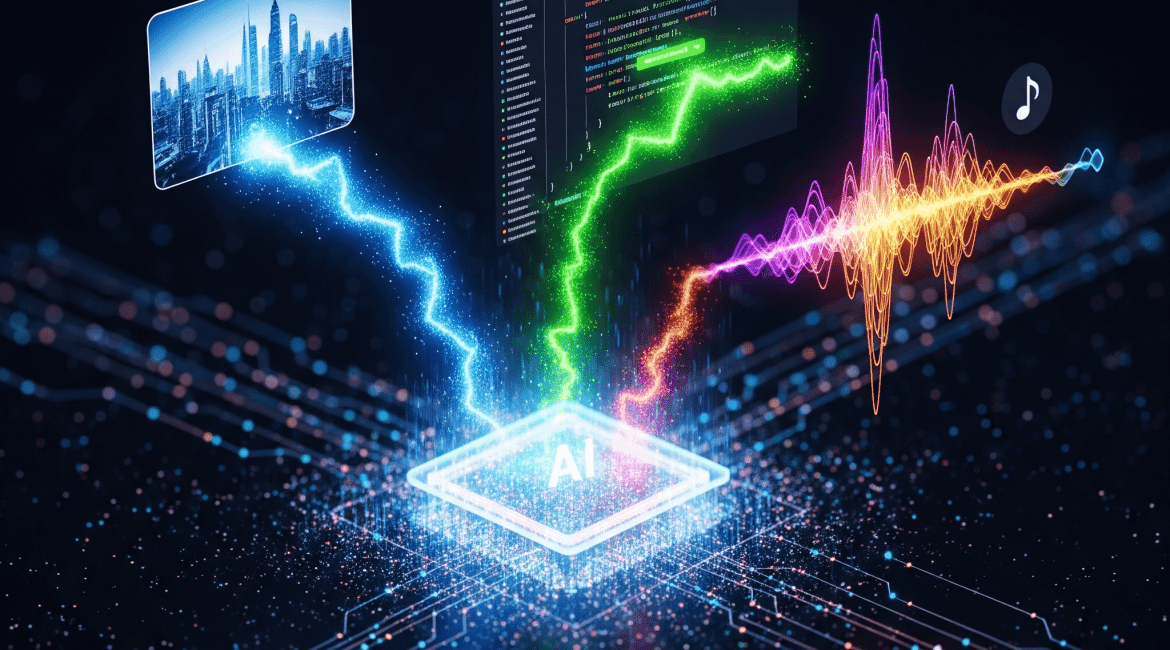
For many, interacting with AI means typing a question and getting a text answer. But the cutting edge of Artificial Intelligence has moved far beyond words on a screen. Modern AI models are increasingly multimodal, meaning they can understand and generate content in various forms – not just text, but also images, code, audio, and even video.
Mastering multimodal AI prompts is about expanding your communication toolkit to unlock these incredible capabilities. It’s about recognizing that the same fundamental principles of clear and specific instruction apply, whether you’re asking for a paragraph or a painting, a script or a song. This opens up entirely new frontiers for creativity, productivity, and innovation.
The Power of Multimodal AI Prompts
Why should you care about prompting AI for outputs beyond text?
- Creative Freedom: Generate original art, unique music, or engaging video concepts from simple descriptions.
- Rapid Prototyping: Quickly create visual mock-ups, code snippets, or audio clips without specialized software or extensive manual work.
- Enhanced Communication: Use AI to generate visuals for presentations, audio for podcasts, or interactive elements for websites.
- Specialized Applications: Leverage AI for tasks like data visualization (images), software development (code), or sound design (audio).
- Future-Proofing Skills: As we discussed in “The Future is Prompted,” multimodal capabilities are a significant part of AI’s evolution, making these prompting skills highly valuable.
The core of effective prompting – whether for text or other modalities – remains clarity, specificity, and an understanding of how to guide the AI, as explored in depth in our AI Prompt Fundamentals Guide.
Prompting for Different Modalities: Core Principles in Practice
While the output type changes, the underlying principles of good prompt engineering largely remain the same. You’ll still use elements like:
- “What” Prompts: Clearly define the subject of the image, the function of the code, or the style of the audio. (See “Decoding ‘What’ Prompts“).
- “How” Prompts: Specify the format, style, and structure (e.g., “as a realistic photograph,” “in Python,” “as a jazz melody”). (See “Mastering ‘How’ Prompts“).
- “Tone/Style” Prompts: Dictate the aesthetic or emotional feel (e.g., “with a whimsical, fantastical feel” for an image, or “a melancholic, sparse piano melody”). (See “Using Tone and Style Prompts“).
- Constraints: Set limits on resolution, duration, complexity, or specific elements to include/exclude. (See “Using Constraints“).
Examples of Multimodal AI Prompts:
For Images (Text-to-Image):
- “Generate a photorealistic image of an astronaut riding a unicorn on the moon, with Earth visible in the background. The lighting should be dramatic and cinematic, as if from a sci-fi movie.”
- “Create a watercolor painting of a bustling European market scene in the rain, from a bird’s-eye view, with warm light reflecting off wet cobblestones.”
For Code (Text-to-Code):
- “Write a JavaScript function that takes an array of numbers and returns their sum, using a ‘for…of’ loop.”
- “Generate an HTML and CSS snippet for a responsive navigation bar with three links: Home, About, Contact. Make the links change color on hover.”
For Audio (Text-to-Audio/Music):
- “Compose a short, uplifting piano melody for a YouTube intro, in the style of classical music, approximately 15 seconds long.”
- “Generate a sound effect of gentle rain falling on a tin roof.”
Best Practices for Multimodal Prompts:
- Be Descriptive: The more detail you provide about the visual elements, sonic qualities, or code logic, the better.
- Use Adjectives and Verbs: For images and audio, descriptive words are your best friends.
- Specify Style/Genre: Just like with text, defining the artistic style (e.g., “impressionist,” “lo-fi,” “clean code”) is crucial.
- Consider Iteration: Your first attempt might not be perfect. Use iterative prompting to refine details (e.g., “Make the unicorn in the last image sparkle more,” “Make the bass line in the previous melody more prominent”).
As AI continues to evolve, your ability to communicate effectively across different modalities will become an invaluable skill. Embrace the exciting possibilities of multimodal AI prompts and push the boundaries of what you can create.
Ready to unlock the full creative potential of AI beyond just text? Our AI Prompt Fundamentals Guide offers detailed strategies and numerous examples for mastering multimodal prompting, empowering you to generate images, code, and more with precision and artistry.


